
MV Cable Fault Testing, Identification & Jointing | Complete On-Site Execution | FK Engineering
Introduction
Medium Voltage (MV) underground power cables form the backbone of industrial and commercial electrical distribution systems. Any fault in an MV cable can result in power outages, operational losses, and safety risks. Accurate fault testing, precise fault identification, and reliable jointing are therefore critical to restoring power safely and efficiently.
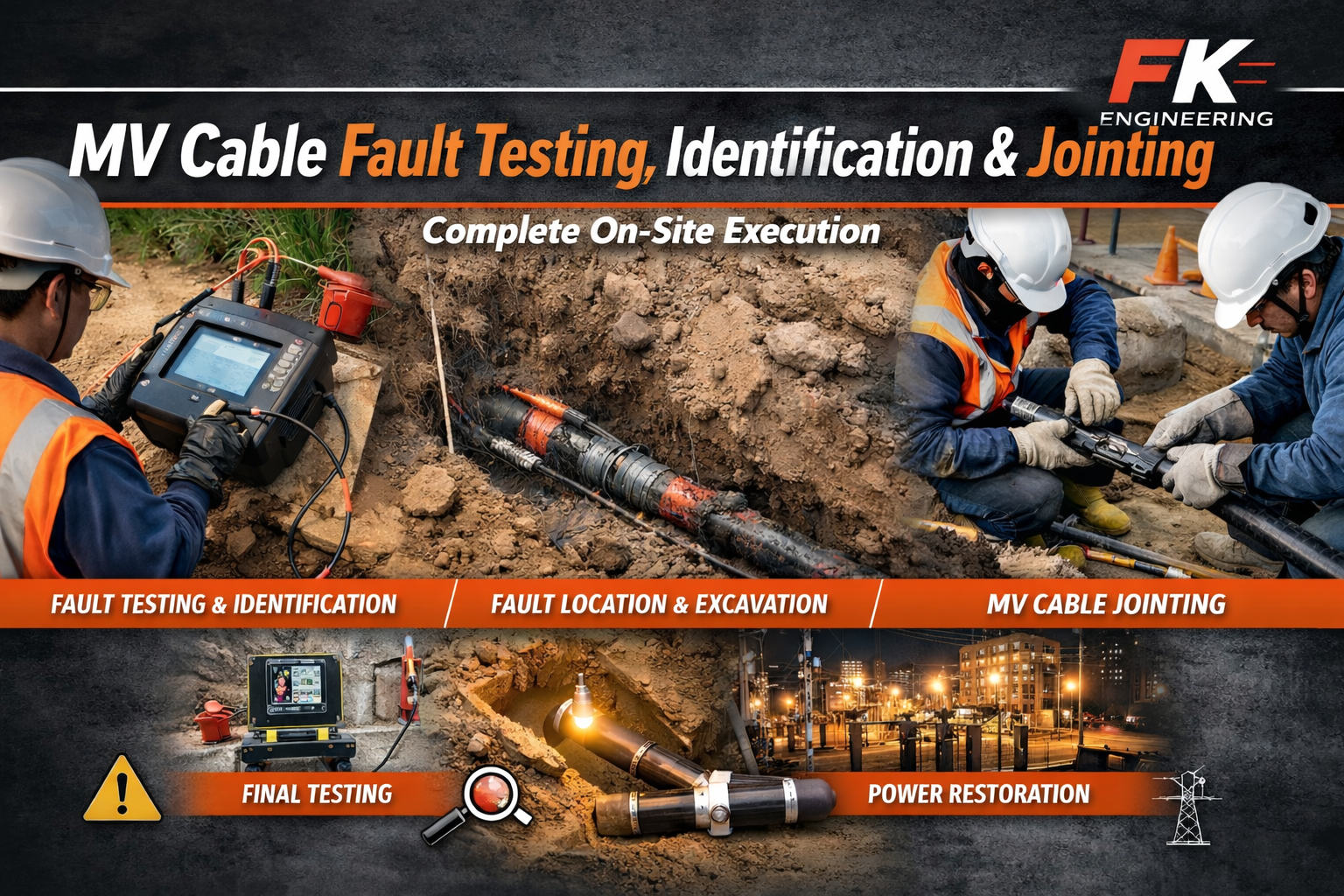
FK Engineering successfully carried out MV cable fault testing, pinpoint fault identification, and complete on-site jointing, ensuring rapid restoration of supply while maintaining strict safety and quality standards. This article outlines the complete field execution methodology adopted during the project.
Project Scope and Objective
The scope of work included:
- Electrical testing of MV underground cable
- Identification and pinpointing of cable fault location
- Safe excavation and exposure of the faulty section
- Removal of damaged cable portion
- On-site MV cable jointing and insulation restoration
- Final testing and readiness for energization
The primary objective was to locate and rectify the cable fault with minimum downtime, ensuring reliable and long-term cable performance.
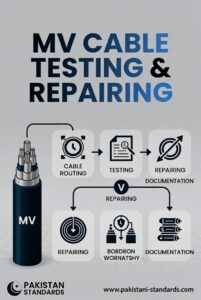
Overview of MV Cable Faults
MV cable faults typically occur due to:
- Insulation degradation over time
- Mechanical damage during civil works
- Moisture ingress into cable insulation
- Improper jointing or termination
- Overloading or thermal stress
Early and accurate fault detection is essential to avoid extended outages and repeated failures.
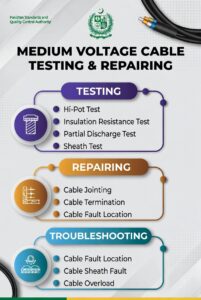
Fault Testing and Identification Methodology
- Initial Cable Testing
Before fault location activities:
- The cable was isolated and safely discharged
- Insulation resistance and continuity tests were performed
- Phase identification and earthing verification were completed
These tests confirmed the presence of a fault and prepared the cable for fault location procedures.
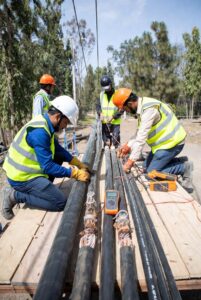
- Fault Location and Pinpointing
Using specialized fault-locating equipment:
- Pre-location techniques were applied to estimate the fault distance
- Pinpointing instruments were used to identify the exact fault location
- Ground markers were placed to indicate the excavation point
This precise approach minimized unnecessary excavation and reduced restoration time.
Excavation and Fault Exposure
Once the fault location was confirmed:
- Controlled excavation was carried out at the marked point
- The damaged cable section was carefully exposed
- Visual inspection confirmed insulation breakdown and conductor damage
Safety barriers and proper signage were installed throughout the excavation process.
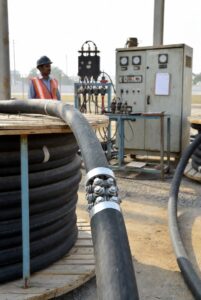
MV Cable Jointing Procedure
- Removal of Faulty Section
- The damaged portion of the cable was cut and removed
- Cable ends were prepared according to jointing kit specifications
- Clean and moisture-free surfaces were ensured
- Approved MV cable jointing kits were used
- Conductor connections were securely crimped
- Insulation layers were rebuilt step-by-step
- Stress control and outer sheath restoration were completed
All jointing activities were performed by certified jointers to ensure long-term reliability.
Post-Jointing Testing
After completing the joint:
- Insulation resistance testing was repeated
- Continuity and phase sequence were verified
- High-voltage or pressure testing (as applicable) was conducted
Test results confirmed the integrity and readiness of the repaired cable section.
Throughout the project, FK Engineering strictly followed:
- Electrical safety procedures and lockout/tagout practices
- Use of appropriate PPE for all field personnel
- Compliance with manufacturer and industry standards
- Quality checks at each stage of execution
This ensured safe working conditions and dependable project outcomes.
On-Site Execution and Documentation
All activities were executed under professional supervision and documented for record purposes. A complete on-site execution video was also prepared to demonstrate:
- Fault testing procedures
- Fault identification process
- Jointing execution steps
- Final testing and restoration
This documentation supports transparency, training, and future reference.
Project Outcome
The successful completion of MV cable fault testing and jointing resulted in:
- Rapid restoration of power supply
- Reliable and long-term cable performance
- Reduced risk of repeat faults
- Minimal disruption to site operations
The cable system was restored to safe operational condition and prepared for energization.
Conclusion
MV cable fault testing, identification, and jointing require technical expertise, precision equipment, and strict safety compliance. Through systematic execution and professional field practices, FK Engineering delivered a complete and reliable on-site solution, ensuring uninterrupted power distribution and customer satisfaction.
Tags: #MVCableFaultTesting #CableFaultIdentification #MVCableJointing #MediumVoltageCable #CableFaultDetection #PowerCableTesting #ElectricalTesting #ElectricalMaintenance #PowerDistribution #CableRepair #ElectricalEngineering #IndustrialElectrical #UndergroundCable #FaultFinding #ElectricalServices #OnSiteServices #PreventiveMaintenance #FKEngineering #ElectricalContractor